

ESPN analyst Brian Windhorst just said what Milwaukee fans don't want to hear, and it's going to shape every trade conversation if Giannis ever hits the market. The return won't be what anyone expects, and the Bucks need to prepare for that reality now.
On The Hoop Collective podcast, Windhorst broke down why the market for aging superstars has fundamentally changed.
"This is the difficulty that teams are having looking at guys in their 30s, basically players who have some injury history. And you're going to have to pay like $60 million a year when they're in there, when they're 34, 35, 36," he said.
The Bucks will have a hard time getting value back if they trade Giannis
That's a gut punch for Milwaukee's front office, and Windhorst's right to call it out. The theoretical value of a two-time MVP doesn't match the practical reality of what teams are willing to give up in 2025.
"I can hear somebody out there listening to this podcast saying, 'What are you talking about? This is Giannis. Giannis will go for two star players and six first-round picks.' Maybe that will happen. I am just telling you I talked to the guys who make these trades every day, all day long and the appetite is just different. Everybody is feeling a certain way. I'm just telling you I could end up being wrong. I'm just reporting back," Windhorst also said.
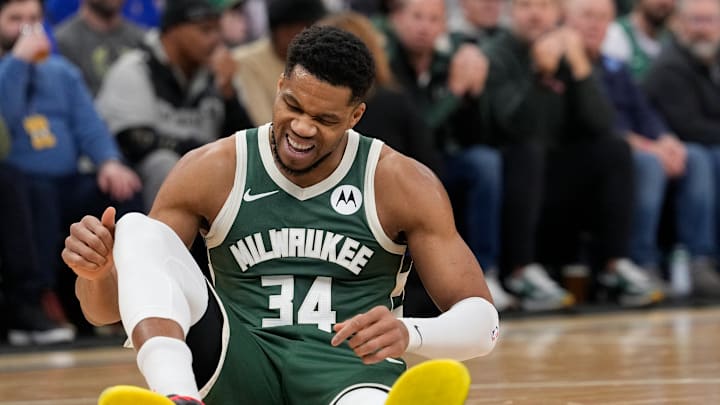
Giannis is 30 years old with an injury history that's starting to pile up. The knee problems, the wear and tear from a decade of carrying offensive and defensive loads, it's all there. And teams know they'd be committing superstar money annually to a player who'll be in his mid-30s when that contract peaks.
Perhaps the Damian Lillard trade set a new precedent that probably hurt Milwaukee's leverage before they even knew they needed it. Portland got a solid return, but nothing close to what a player of Lillard's caliber "should" have fetched in theory. Teams are gun-shy about mortgage-the-future deals for aging stars, even elite ones.
What makes Windhorst's reporting so valuable is that he's not speculating—he's relaying actual conversations with front office executives. These are the people who'll be on the other end of Jon Horst's phone calls if Giannis demands out. And they're telling Windhorst the market just isn't there for massive haul trades anymore.
All this means is that the massive haul that can instantly jumpstart a rebuild may just be a fantasy that fans imagine. Because the hard pill to swallow right now is that maybe that's not happening. The return would likely be closer to, say, one quality young player, a couple of picks with protections, and a salary filler. That's the realistic return in today's market for a superstar over 30 with injury concerns.
It's not a total given, of course. Because at the end of the day, Giannis is a top-three player in the world who is still playing at an MVP level. So far this season, he's averaging 28.9 points, 10.1 rebounds, and 6.1 assists per game on elite 63.9 percent shooting efficiency. Any team he ends up on will turn into a contender overnight.
But if what Windhorst is saying is true, then this reality completely changes Milwaukee's thrust going forward. If the return for Giannis is going to be disappointing regardless, then the incentive to trade him early evaporates. Why deal him now for a mediocre package when you could run it back one more time and hope for a miracle playoff run?
This means two things. First, the Bucks absolutely cannot cave to any specific destinations that Antetokounmpo has in mind. And next: the Bucks can't wait too long to pull the trigger. Because every year that passes, every injury that accumulates, every birthday Giannis celebrates, his trade value decreases. The window to get maximum return is already closing, if it hasn't closed already.
Milwaukee's nightmare scenario is Giannis demanding a trade and discovering the return is nowhere near franchise-altering. Instead of building blocks for the next era, they'd get role players and mid-tier picks that don't move the needle.
The harsh truth is Giannis' trade value peaked two or three years ago when he was 27-28, dominant, and without significant injury concerns. Every team would've emptied their war chest for him then. Now the market has changed, and Milwaukee might've already missed their window to maximize his value.
If the Bucks ever trade Giannis, they'd better prepare for disappointment. The return won't match the player's greatness, and that's not Milwaukee's fault—it's just where the NBA market is right now.
 Add us as a preferred source on Google