

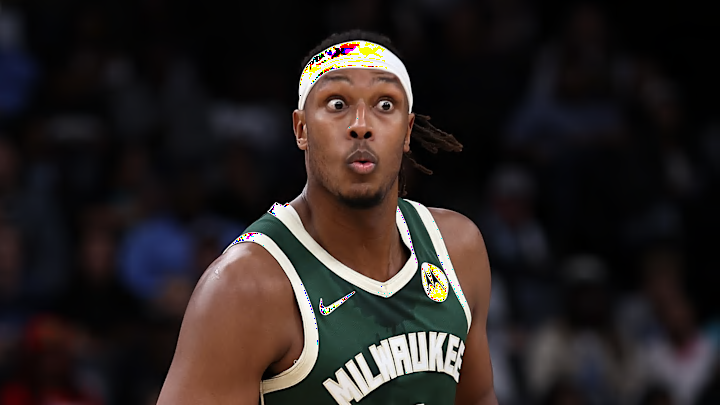
Dabbling in the Anthony Davis sweepstakes, as the Milwaukee Bucks have reportedly done, is one thing. Actually pulling off a trade is another. For the Bucks, acquiring Davis would almost surely mean parting ways with Myles Turner, their starting center and offseason splash signing. A short six months later, are they ready to bail? If so, what was a polarizing move at the time will be thrust back under the microscope more critically than ever.
Giving up on Turner would just make a questionable move look worse
There is plenty to dislike about a potential Davis trade without considering what the Bucks would give up to get him. He can't stay healthy. His jumpshot has vanished. His salary is bloated and will only rise in coming years. He will want an extension soon. He is already 32 years old.
Even tabling those concerns, ditching Turner after half a season would raise eyebrows across the league, and not in a good way. As much as he has underwhelmed, he is painfully underutilized in Milwaukee. Doc Rivers has not schemed the offense to get him opportunities, much less to maximize the full scope of his Turner's toolkit.
The Bucks are also heavily committed to Turner from a financial standpoint. They absorbed Damian Lillard's massive salary in the waive and stretch maneuver precisely to clear cap space for Turner. Maybe that's just sunk cost, but bailing now would make reasonable people wonder why the front office invested at all. Buying high on Turner stock, then selling low three months into the season would be a farcical piece of business. .
Doing so for an aging, injury-prone Davis would be even more dubious. Yet meeting the outgoing salary requirements in a trade would leave them little choice. Turner and Kyle Kuzma are the only players on the roster whose combined paychecks come close to matching the $54 million Davis makes.
Sure, the Bucks could try and keep Turner while cobbling together Kuzma, Bobby Portis, Gary Harris, and Gary Trent Jr. Is that realistic, though? The Bucks need rotation minutes as it is; Dallas would have a roster clog post-trade. A four-for-one swap doesn't make much sense for either side.
Just as importantly, the positional fit wouldn't work, either. The Bucks would have a frontcourt of Davis, Turner, and Giannis Antetokounmpo. Turner, signed to be a key starter, would be forced to the bench. Whatever value he has, Milwaukee wouldn't be getting the most out of him. As intriguing as it might seem, that trio would quickly become cumbersome. In a Davis trade, Turner has to go.
Say the Milwaukee Bucks send out Kuzma, Turner, and draft capital. Concentrated in one semi-available player, the payroll burden would be enormous. What happens when Davis misses weeks or months at a time, making all that money?
Accounting for Lillard, the Bucks would be paying $75 million for zero minutes. Say what you want about Turner, but he shows up to play. Davis, meanwhile, is injured again. He has played just 29 games since joining Dallas last trade deadline. For Jon Horst and the Milwaukee Bucks' front office, caving for Davis would do little more than vindicate critics who called the Turner gamble doomed from the start.
 Add us as a preferred source on Google