

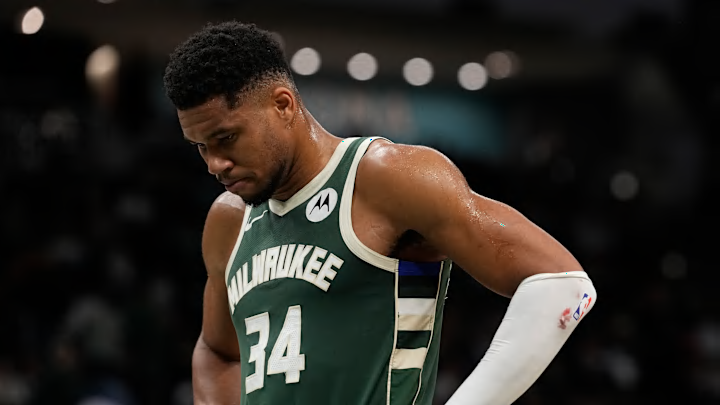
Milwaukee might end up in a worst-case scenario that has nothing to do with their own decisions. The entire NBA has historically watched blockbuster superstar trades blow up in teams' faces, and now nobody wants to be the next cautionary tale.
If the Bucks do trade Giannis, they're going to do so during an era when recent history shows that blockbuster trades where a team gives up a ton of draft capital for a superstar have generally not worked for the team landing the star. Teams have seen that, and this reality could suppress the market for Giannis in ways Milwaukee can't control.
"These trades generally don't work out as well as you would expect for the team acquiring the superstar...[for] the Bucks, if they ever decide to even take a phone call on Giannis, and I'm not sure they have yet, are they going to face a climate of conservatism from teams who have seen a lot of those trades kind of blow up in the faces of the teams who made them?" NBA analyst Zach Lowe said on the Zach Lowe show.
The NBA market for mega trades is not what it once was
Just look at the recent track record.
Most recently, the Lakers mortgaged everything for Anthony Davis and won one championship in the bubble, followed by years of mediocrity and early exits. The Nets gave up their entire future for James Harden, got nothing but disappointment, and are still rebuilding from that disaster. The Suns traded for Kevin Durant and haven't made it past the second round.
Even the Bucks themselves, upon selling the farm to acquire Damian Lillard, had to quickly find ways to integrate him into their system while dealing with his nagging injury issues. Things didn't work out, and they had to settle for landing Myles Turner in his place.
And perhaps front offices are learning a lesson: gutting your roster and draft capital for one superstar rarely produces the championship returns that justify the investment. The math just doesn't work when you sacrifice depth, development, and future flexibility for a single player, no matter how good they are.
"You can make the argument for some of these teams that you know what, we're doing pretty well otherwise, and mortgaging our future and the ability to build on what we're already what we have already got might not be the logical move," NBA journalist Howard Beck also said on The Zach Lowe Show.
"Unfortunately for the Bucks, I think if they come to that point, they may get less than what we saw, even for like Desmond Bane and Mikal Bridges in draft capital specifically."
The timing matters because that collective wisdom around the league is naturally going to directly impact what teams are willing to offer for Giannis. Five years ago, teams were still operating under the "get a superstar at any cost" philosophy. Now they've all seen the consequences of that approach, and they're gun-shy about repeating those mistakes.
So even if Antetokounmpo has proven he can stay healthy and keep playing at an MVP level, executives are going to hesitate before emptying their war chests. They've watched too many of their peers make that bet and lose.
This means the Bucks might be forced to accept a return that doesn't match Giannis' value simply because the market has fundamentally shifted. It's not that teams don't recognize his greatness -- it's that they've collectively decided the price of acquiring greatness is too high given recent historical outcomes.
Milwaukee's leverage is evaporating through no fault of their own. They could do everything right in trade negotiations, but if every potential partner is operating from a place of fear based on what happened to many teams in the past, the return will be disappointing regardless.
The worst possible time to trade a superstar is when the entire league has decided superstar trades don't work. That's where the Bucks find themselves if they ever pull the trigger on moving Giannis.
Sometimes market timing matters more than asset quality. Milwaukee may very well learn that lesson the hard way.
 Add us as a preferred source on Google